
(Part 10 of ?): Approved 2017 Rate Increases
They’re Official. The 2017 rates for individual market health insurance under the ACA in Maryland were approved on September 8, 2016. Since I have provided detailed discussion of the shortcomings of the ACA rate setting process in previous posts, I am limiting this discussion to providing updated statistics that reflect the approved 2017 ACA rates with accompanying short contextual statements as appropriate. As I have done with previous posts, I will also limit these statistics to one insurance provider, CareFirst BlueChoice, Inc. (hereafter CareFirst). CareFirst is the dominant health insurance provider in Maryland and has offered the least expensive plans on the individual marketplace in both 2015 and 2016, the years for which my family has been uninsured due to cancellation of our pre-ACA health insurance policy.
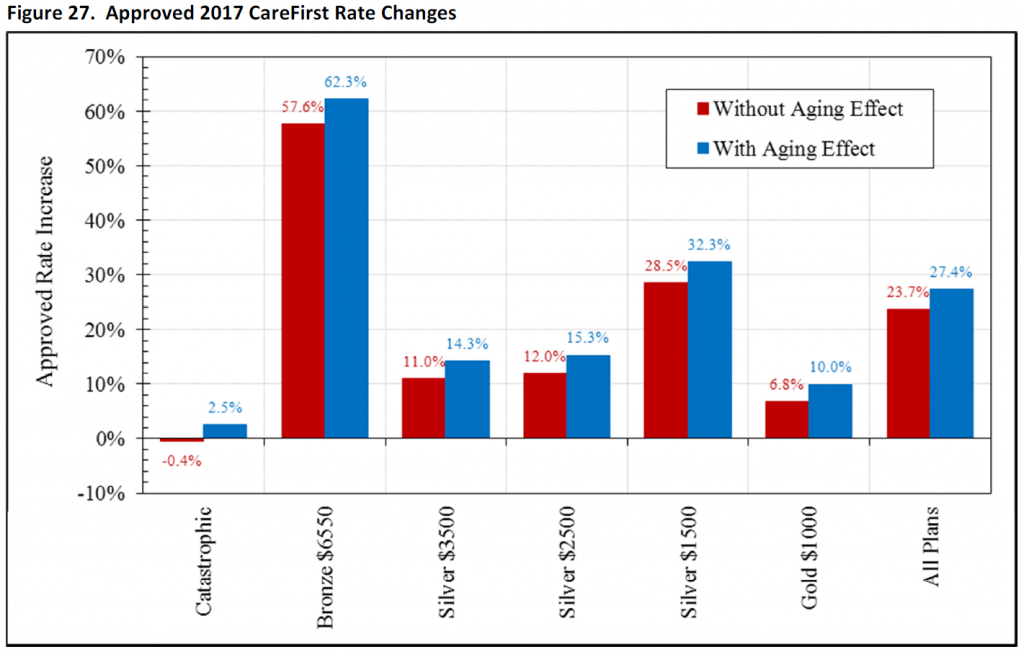
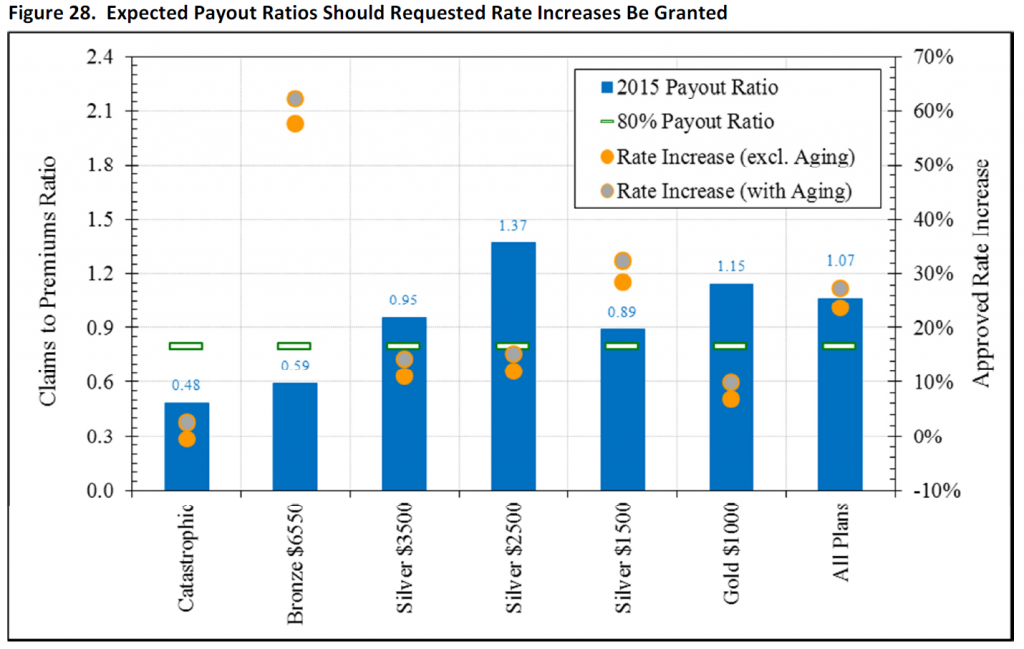
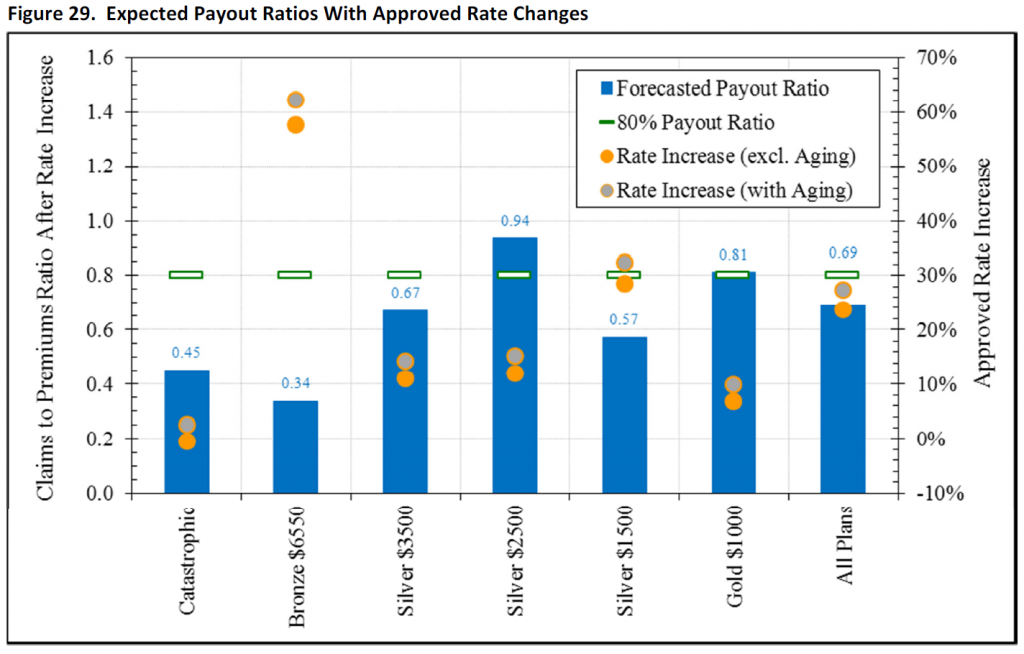
The approved rate increase for the cheapest CareFirst individual marketplace plan (their Bronze plan) is a mere 58 percent if one excludes the aging effect, and only 62 percent for those clueless among us who somehow find it impossible to avoid aging. As shown in Figure 27, this is double the rate increase of any other plan offered by CareFirst. Most perversely, as shown in Figure 28, the increase applies to a plan that demonstrates a 2015 payout ratio of 59 percent. That payout rate does not even consider the rate increases implemented for 2016 (since they are not reflected in the historic data included with CareFirst’s 2017 rate filing). Figure 29 depicts the expected payout ratios when both the 2016 and approved 2017 rate increases are considered. For reasons that should be obvious, the Bronze plan payout ratio is expected to drop to 34 percent.
I have previously demonstrated that the underlying cause of this inequity is the flawed ACA-mandated rate setting process that fails to recognize the claim-inducing effects of ACA cost sharing or provide any mechanism for constraining such effects to the plans that generate inordinate claims. This rate setting process combined with a complete lack of either cost or behavioral constraints leads directly to the runaway claim behavior observed in the historic ACA data. If a rate setting process was implemented to at least restrict ACA behavioral effects to individual plans, appropriate premium changes would be substantially different than those approved. As shown in Figure 30, instead of a 60 percent increase, the CareFirst Bronze plan should have been approved for a 34 percent rate decrease. No other single plan even approaches the disparity between the Bronze plan premium rates that are merited and those approved. This is especially significant given that this is the cheapest CareFirst plan available to individual market consumers.
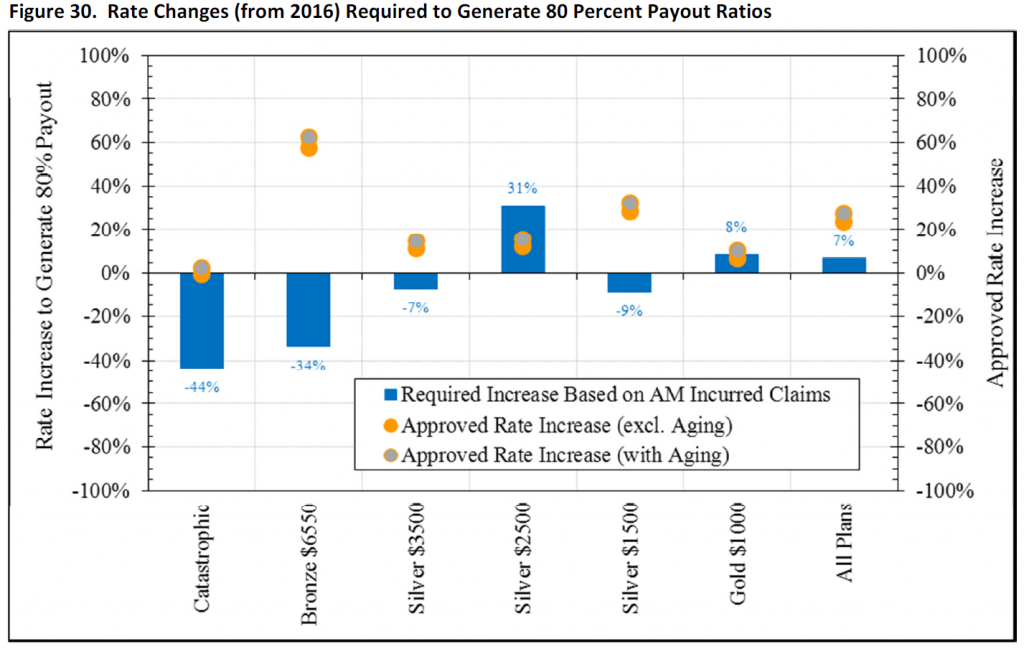
Figure 31 shows the plan-specific returns on investment with and without the approved rate changes, while Figure 32 shows the corresponding returns under a rate structure designed to produce reasonable (i.e., 80 percent) plan-specific payout ratios. These data show dollars of incurred claim per dollar of out-of-pocket cost paid (premiums plus co-pays); in other words dollars of benefit received per dollar paid into the system. As depicted in Figure 31, plan-specific returns under the current rate setting process are grossly inconsistent with the design actuarial values of the plans. Conversely, Figure 32 shows that a plan-specific rate review generates returns that are appropriately in line with design actuarial values.
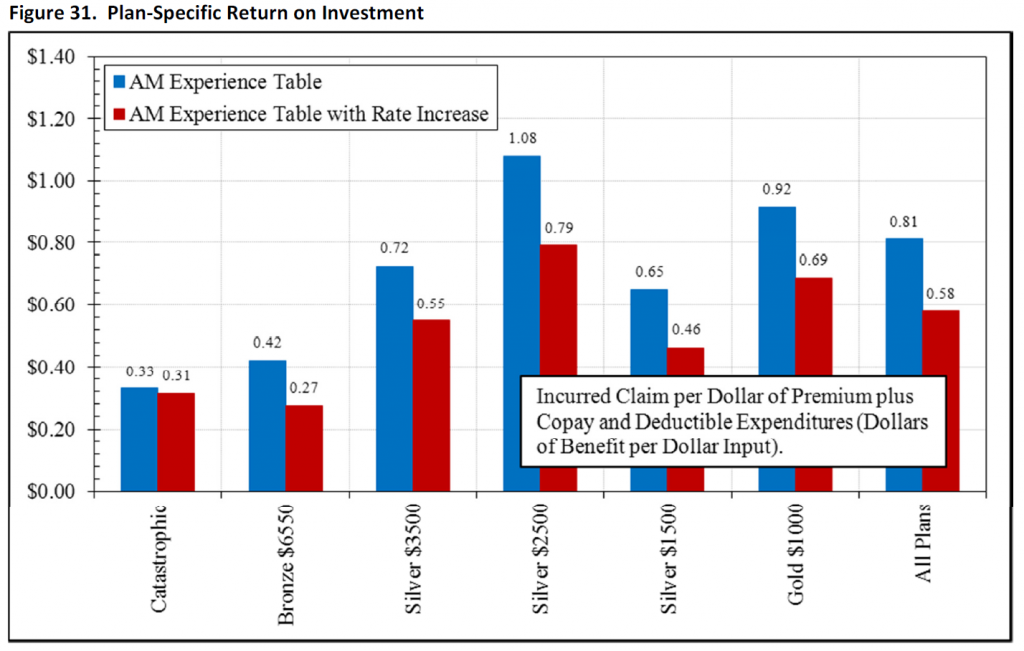
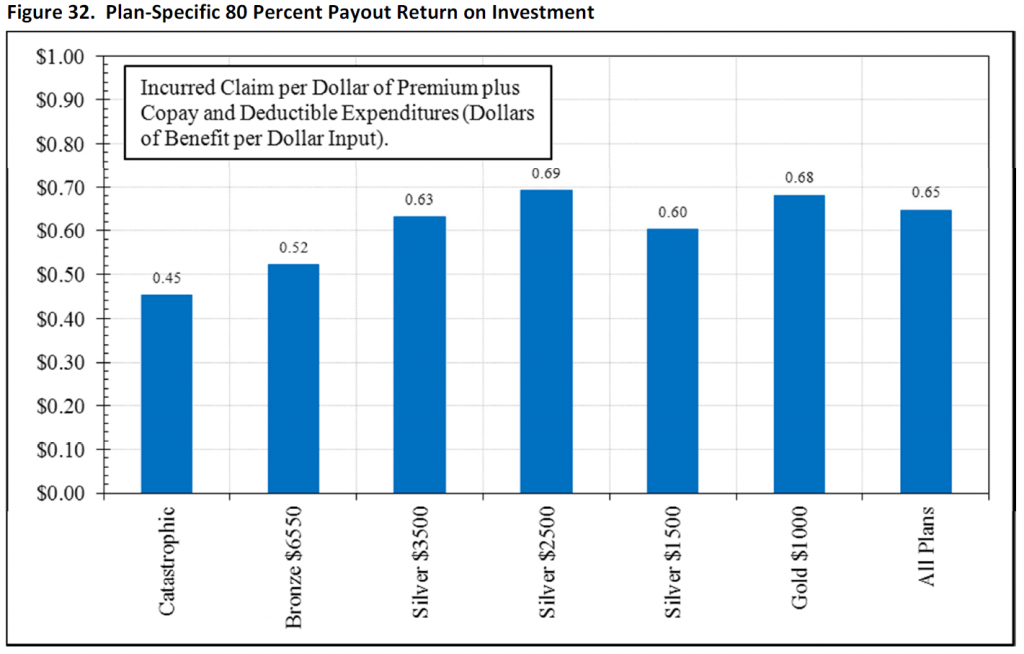
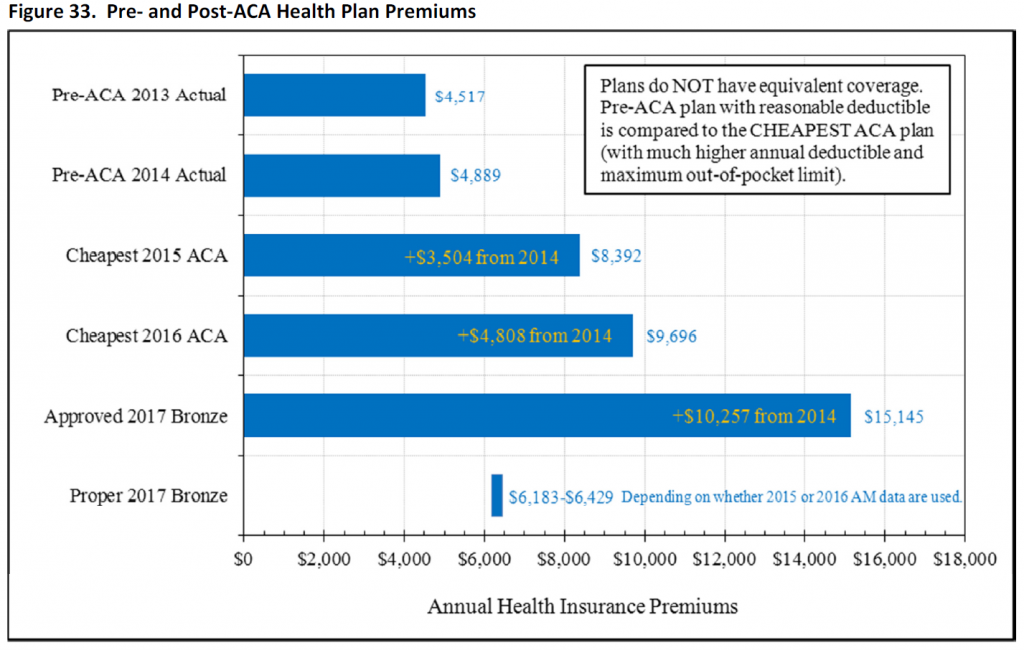
Figure 33 depicts the annual premiums associated with the pre-ACA plan for my family versus the cheapest CareFirst premiums available for 2017 in Maryland. With the Bronze level premium increase for 2017, plan premiums alone have more than tripled over a three year period; for coverage that is substantially inferior to that under our pre-ACA plan (e.g., annual out-of-pocket maximums of $28,000 ACA versus $10,000 pre-ACA). Premiums are now so high that aging effects alone will increase premiums by $700 annually even if not a single subsequent rate increase is requested.
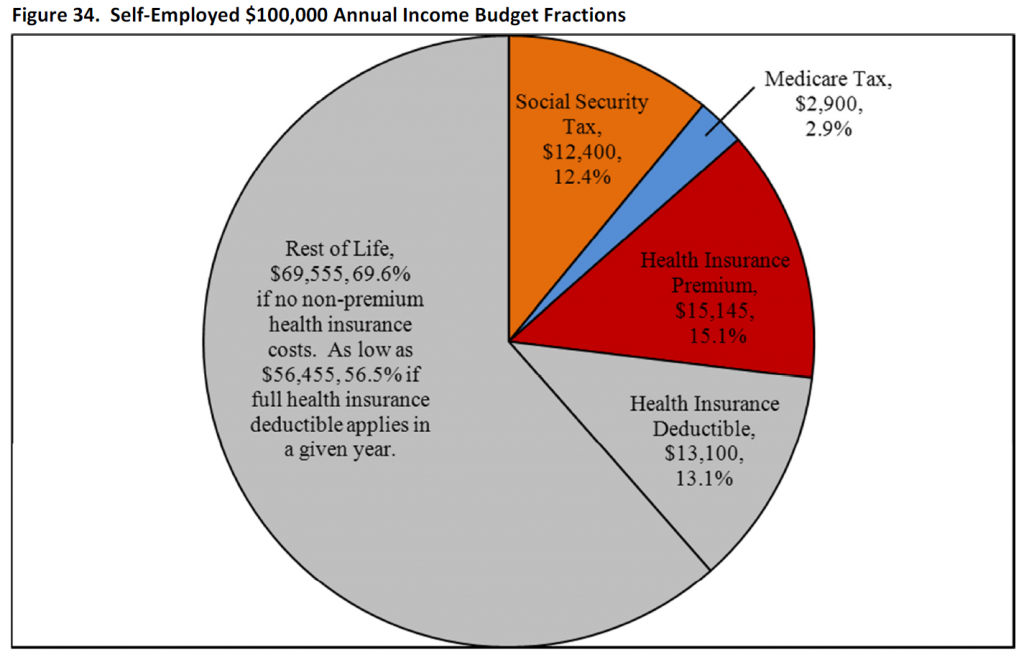
Finally, as shown in Figure 34, the 2017 premiums alone would represent 15.1 percent of gross income for a family of three making $100,000 annually. Maximum annual out-of-pocket expenses for the plan would constitute 28.2 percent of that same income. Assuming no medical expenses beyond plan premiums, the combination of health insurance, Social Security, and Medicare taxes alone represent 30 percent of that $100,000 income for the self-employed. For maximum annual out-of-pocket expenses, that fraction increases to over 43 percent. I isolate these three programs as they represent the federally-mandated health and welfare programs to which all taxpayers are subjected, and to indicate that the ACA is a larger burden than Social Security, even for the self-employed who pay both the employee and employer share of the tax, and a substantially larger burden than Medicare that is intended to care for the least healthy segment of society. Of course federal, state, and county income taxes, as well as property, sales, and gasoline taxes must also be paid before a family can devote a dime to such mundane expenses as food and shelter.
The ACA has essentially amounted to a $10,000 (and counting) annual tax increase for older self-employed individuals. Is there really confusion with regard to why such people are not signing on? I paid a health insurance “tax” for every member of my family regardless of their age (including additional individual policies for three older children who are not part of my health care family) every year of my self-employment until 2015. Not once during those years did we ever exceed our annual deductible. I understand responsibility and live it every single day. The official response to my decision (and that of others) to walk away from a tripling of my health insurance tax appears to be to wonder whether the penalty associated with making this decision should be increased. As if risking catastrophe is not penalty enough. Of course there are exemption criteria, but that does not solve the cost of coverage issue as, at least in Maryland, no individual health insurance can be sold that is not also offered on the ACA marketplace. You’re either insured under the ACA or you are not insured.
If ACA designers really want to spread the responsibility, there are two things that can be done immediately. First, introduce critically needed cost and behavioral constraints. Service limitations aren’t needed, but some type of pay-as-you-go structure must be imposed to put some of the burden back onto those who actually use and more importantly those who abuse (yes, abuse) the system. Second, require all Americans regardless of employment to obtain coverage through the individual market without any employer or government subsidies other than those offered routinely to the self-employed through that market. When the problems of this marketplace become everybody’s problems then, and only then, will shared responsibility have meaning and will those charged with designing and implementing the ACA have an incentive to address deficiencies.
I will address whatever the next installment of this ridiculous saga might be in Part 11.
Posted September 11, 2016Questions or comments can be sent to aca@meszler.com